
💼 The Company
Worten is one of the largest and most recognized retail brands in Portugal, specializing in technology, consumer electronics, and home appliances. Present in the daily lives of millions of people, it combines a strong network of physical stores with a robust digital platform, delivering a simple, accessible, and fully integrated shopping experience.
A call centre serving the Iberian Peninsula was facing a significant increase in the volume of enquiries. The service was directly linked to the logistics of delivering large household appliances, creating a strong interdependence between customer service and logistics operations.
🔍 Analysis
📍 Scenario
A call center operation responsible for customer support across the Iberian Peninsula served as the primary point of contact for inquiries related to the delivery of large home appliances. The service acted as a bridge between end customers, internal systems, and a highly complex logistics operation dependent on multiple third-party providers and outsourced drivers. As the operation scaled, clear signs of strain began to emerge:
-
• A significant increase in call volume
-
• Longer average handling times thereby causing frustration among end consumers
-
• Difficulty for agents to navigate multiple systems simultaneously
🧨 Problem
The operational environment was highly complex, it led the agents to high cognitive load, directly impacting both efficiency and service quality. At the same time, the logistics operation particularly for large appliance deliveries showed structural instability.
Logistics systems and adverse weather directly impacted deliveries, with heatwaves and heavy rainfall increasing failed deliveries-further constrained by limited driver flexibility.
As a result, a cascading effect was created:
-
• Failed deliveries
-
• Huge lack of proactive communication to customers
-
• Increase in inbound contacts
-
• Overload of the call center
In this context, the call center was no longer just a support channel, but became a containment point for systemic operational failures, absorbing issues that originated outside of its direct control.
🎯 Objective
-
• Identify the main causes of the increase in enquiries
-
• Map the customer’s and agent’s journeys, identifying key touchpoints and pain points
-
• Analyse how to improve logistics software to positively impact the customer experience
-
• Reduce cognitive load and improve operational efficiency
🚀 Outcome
-
• Suggest to the team responsible for the shopping website that they redesign the website’s purchasing flow, which is significantly outdated. Communication issues during the purchasing process will lead to an increase in contact centre enquiries
-
• Create contingency plans for adverse weather conditions
-
• Improve delivery tracking for agents and customers
-
• Notify customers before a disruption occurs
-
• Reduce the need for contact
🛠️ Resources
Tools
-
Consent Forms
-
Video Recording
-
Voice Recording
-
Microsoft Forms
-
Google Spreadsheet
-
Miro
Team
-
Team Leader
-
UX Research
My Role
-
Ux Researcher
Time
-
Overall: 8 months
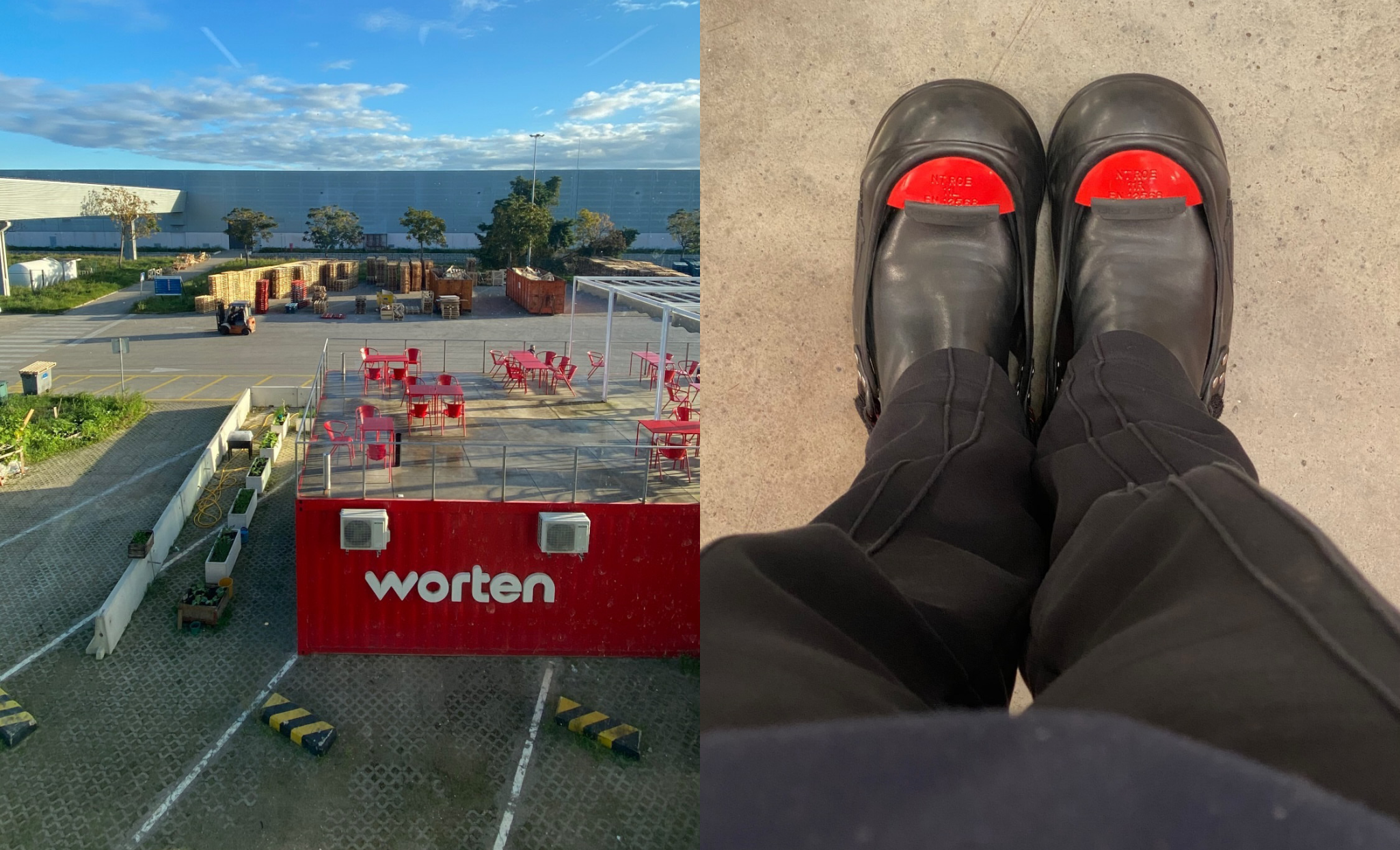
Research field - Logistic Center.
📚 Methodology
A mixed-methods approach (qualitative + quantitative) was used:
🕵🏻♀️ Desk Research
-
• User Journey Map
-
• Analysis of tickets and call logs
-
• SLA data and average handling times
-
• Reports on logistical failures
-
• Listening to calls over a one-year period, focusing on major domestic issues
🎤 Interviews with Stakeholders
Objective: to align internal perceptions and identify hypotheses
-
• Call centre operations
-
• Logistics team
-
• Supervisors and team leaders
👥 Shadowing (contextual observation)
-
• Monitoring agents in real time
-
• Identification of multitasking and constant switching between systems
🎥 Interviews with Agents
-
• Day-to-day challenges
-
• Main causes of stress and errors
-
• Views on tools
🔢 Quantitative Analysis
-
• Most common reasons for contact
-
• Correlation between delivery failures and call volume
-
• Seasonal peaks
🔑 Key Insights
⚠️ Systemic Issues and a Lack of Coordination in Communication (beyond UX)
A significant proportion of calls were not related to service failures, but rather to logistical issues and, above all, to communications from other channels, such as TV campaigns or digital advertising.
For example, whenever there were ticket sales campaigns (e.g. for events or concerts) directed to the same contact line, the call centre would quickly become overwhelmed with requests from across the country. As a result, critical enquiries, particularly from customers awaiting information on deliveries of large household appliances, were left on hold for extended periods or went unanswered.
This scenario highlighted a structural flaw: the lack of segmentation of contact channels by service type. By centralising different needs on a single line, the Marketing department ended up placing unnecessary pressure on an already fragile operation, compromising the quality of the service provided.
In short, the problem was not just one of UX, but of strategic misalignment between Marketing, Operations and Logistics, with a direct impact on the customer experience and the efficiency of customer service.
🕳️Delivery Gaps for Large Household Appliances
Delivery failures exposed a critical issue in the customer experience, with a direct impact on the contact centre.
-
Uncompleted deliveries led to repeated customer enquiries
-
The lack of tracking increased uncertainty and anxiety
-
Communication based on estimates created mismatched expectations
With no visibility of where their order was, customers relied on the call centre. When deliveries frequently failed, customers would become frustrated after missing a day’s work waiting for their large household appliance to arrive, leading to a loss of trust and increased pressure on operations.
An end-to-end failure, where a lack of transparency and control amplifies the impact of logistical problems.
-
Lack of technology to inform the customer where their order is
-
Out-of-date information between systems
-
Difficult rescheduling
-
Unrealistic promises
👉 Result: failure → uncertainty → contact → overload → poor experience
🛑 Problems throughout the journey
From purchase to delivery, created a domino effect that had a direct impact on the customer experience and operations.
The process began with a purchase based on trust in the brand, but without clear guarantees of tracking. The customer was unsure whether they would receive a working tracking number The website featured ambiguous communication, creating unclear expectations
From there, any operational failure quickly snowballed:
👉 Purchase with little clarity → Poorly defined expectations → Delivery failure → Customer without information attempts to contact the contact center → Increase in calls → Agent with limited or out-of-date data → Handling time increases → Queue grows → More customers affected → Experience deteriorates at scale
🌡️ Weather Factors
A clear pattern emerged: Heatwaves (summer) and heavy rainfall (autumn) disrupted logistics operations The drivers’ contract terms limited operational flexibility
👉 Result: undelivered parcels → immediate increase in customer enquiries
📈 Opportunities for improvement
🚚 📱Logistics & Communications
-
Implement a detailed, consistent and real-time tracking system for customers, vailable on the app and website, complemented by notifications via email and SMS.
-
Develop contingency plans for weather events, including visible communication on the website/app (e.g. warnings about weather conditions that may impact delivery times), managing expectations transparently
🛒 Shopping Experience (Website and App)
-
Clear Communication and UX Writing:
Communication regarding delivery times and terms is ambiguous and often unrealistic, creating expectations that are not met.
-
Access to Information (Reducing Friction):
Currently, users have to navigate through several pages to find essential information, which leads to cognitive fatigue and users abandoning the site.
-
Flexibility at Checkout:
The requirement to create an account introduces unnecessary friction at a critical point in the customer journey.
-
Post-Purchase Experience:
The current post-purchase experience is unclear and lacks sufficient transparency, leading customers to contact the contact centre.
-
Operational Impact
Failures throughout the digital journey result in an increase in avoidable customer enquiries